How to Talk to the People in Your Life About Your Mental Health
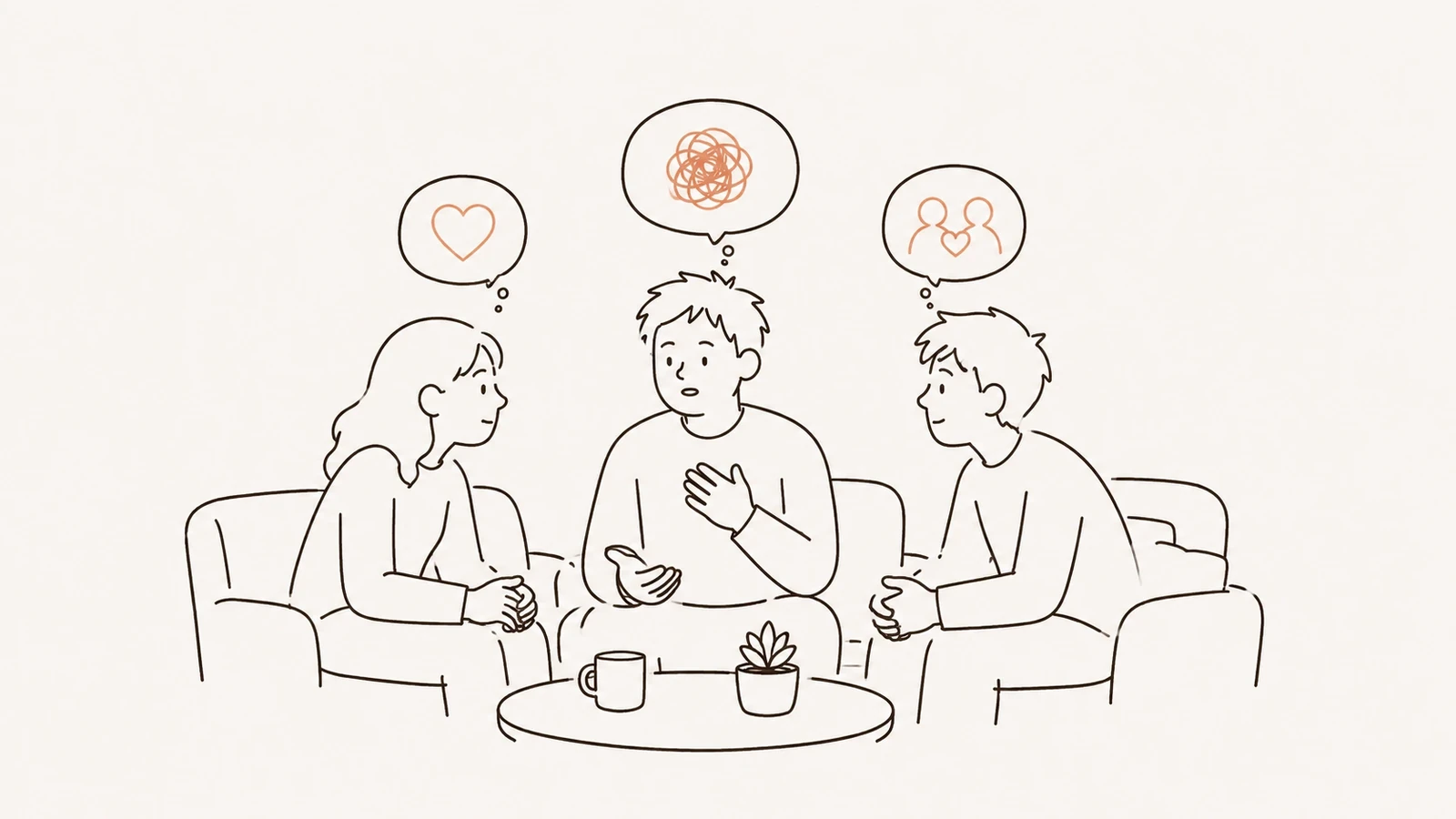
Most people who are struggling in silence are not doing it because they want to. They are doing it because they cannot figure out how to start. The conversation feels too big, too risky, or too hard to predict. This is about making it smaller and more manageable, not easier in a fake way, but genuinely more approachable.
Why it feels so hard to start
Part of it is not knowing what reaction you will get. Some people respond well to hearing that someone they care about is struggling. Others get scared, and that fear can come across as dismissive or controlling. Others feel guilt and make it about themselves. You cannot know in advance which version you will get, and that uncertainty makes it tempting not to try.
Another part is the way mental health still carries weight in some relationships and communities. Especially where resilience is highly valued, saying "I am struggling with my mental health" can feel like saying something shameful or weak. It is not, but the fear that it will be received that way is completely understandable.
And sometimes the hardest part is just not having the words. You know something feels wrong, but you cannot explain it clearly enough to say it out loud to someone who will ask you questions you cannot answer. This happens in therapy rooms too, which is why so many people withhold things from their own therapist.
You do not have to explain everything at once
The idea that you need to have a full, clear, articulate explanation of what you are going through before you can say anything is one of the things that keeps people silent the longest. You do not need that.
A starting point can be very small. "I have been feeling really off lately and I think I need some help." That is enough to open a door. You do not need to explain the whole thing on the first try. You do not need a diagnosis or a label. You just need to signal that something is going on and that you want support.
If the person asks what is wrong and you do not fully know, saying that is also fine. "I am not sure exactly, but I have been feeling anxious a lot" (taking a quick free anxiety self-assessment or exploring support for anxiety can help clarify this) or "I have been really low and I cannot shake it" is information. It is a real answer, even if it is incomplete.
Picking the right moment matters more than you think
Timing affects how conversations land. Trying to talk during an argument, when the other person is stressed, or when there are several other people in the room is setting the conversation up to go badly. None of that is your fault, but it is worth thinking about.
A quieter moment, when you have some privacy and neither of you is rushed or upset, gives the conversation a better chance. A car ride can work well because there is no eye contact pressure. A walk works for the same reason. You do not need a formal sit-down. You just need a moment where the other person can actually hear what you are saying.
Something like "Can I talk to you about something? It is not urgent, but it is important to me" gives the other person a moment to shift into listening mode before you say the harder thing.
What to do if the first conversation does not go well
Sometimes it does not land the way you hoped. The other person might get defensive, or minimize what you said, or react with worry that turns into lecturing. That is painful, and it is also not the end of the road.
If the first conversation was difficult, it does not mean the door is closed permanently. It might mean the timing was wrong, or that the person needs more than one conversation to understand what you are telling them. It might also mean that someone else in your life, a close friend, a partner, or a professional such as a GP or counselor, could be a better first step.
It is also worth knowing that you do not have to go through anyone else to get support. There are resources available to you directly. You are allowed to seek help for yourself.
If you want to practice first
Some people find it useful to say the thing out loud before they say it to the person they have in mind. Not as a script, but just to hear themselves say it. This is actually one of the things sokoon can help with. Through free daily text sessions, you can work through what you want to say, figure out which parts feel most important, and think through how you might respond to different reactions, all before you have the real conversation.
It is not a replacement for the actual conversation, but it can make the actual conversation feel less like jumping off something with no idea where you will land.
Not ready to talk to someone yet? That is okay.
sokoon is a private space with a free daily text session to work through what you are feeling before you are ready to say it out loud.