How to Stop Overthinking at Night (and Actually Get Some Sleep)
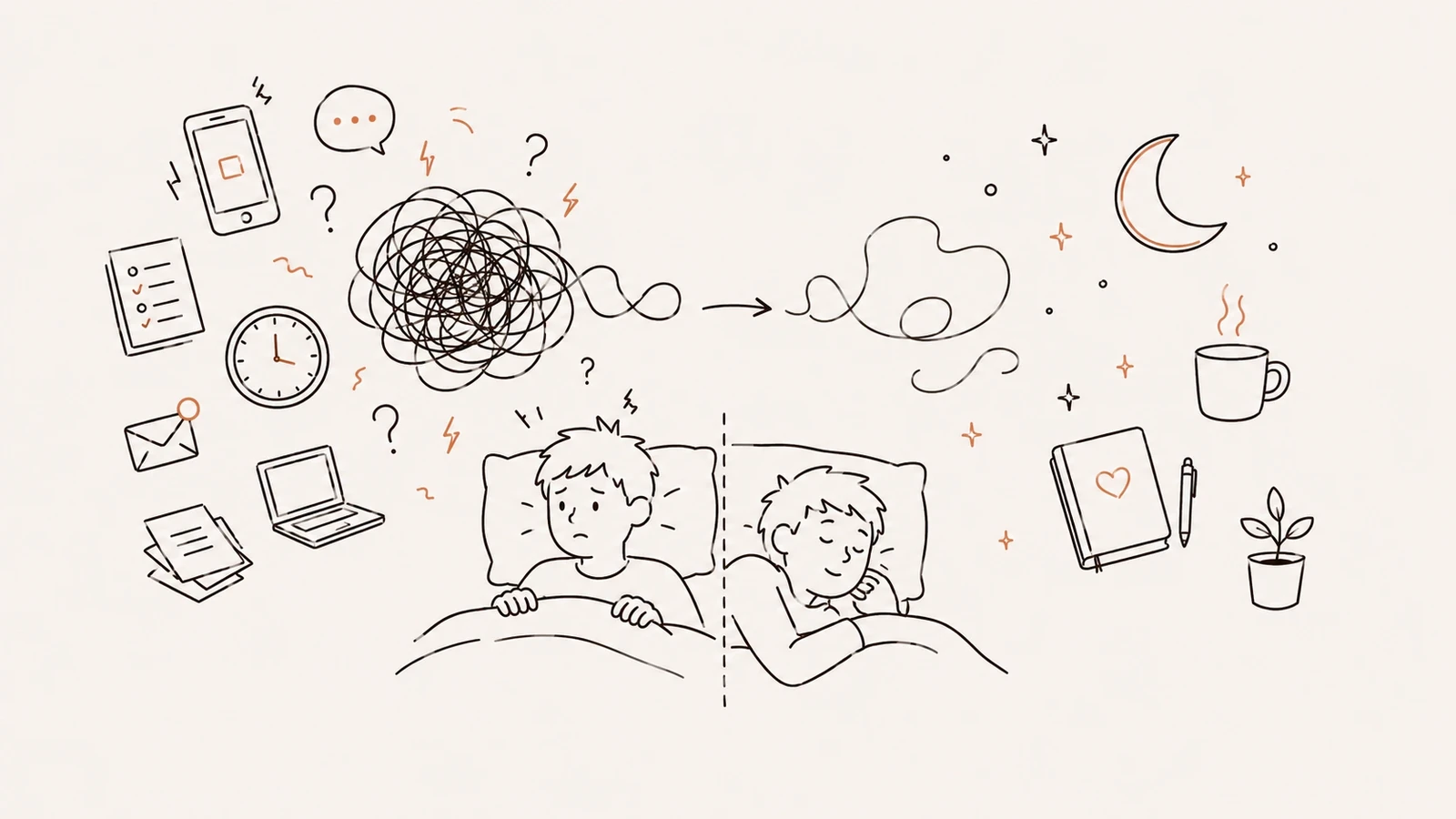
It is almost always worse at night. During the day there is enough going on to keep your attention busy. Then the lights go off, the noise stops, and your mind brings up everything you have been too busy to deal with: the conversation you handled badly, the thing you forgot to do, or the vague feeling that you are behind on something you cannot quite name. If that is familiar, here is what is happening and what can help.
The goal tonight is not to solve every thought. It is to decide which thoughts need an action tomorrow, which need more information, and which are simply repeating.
Why thoughts feel louder at night
During the day, work, people, errands, and your phone compete for your attention. At night that competition disappears. A thought that stayed in the background at 3pm can suddenly feel like the only thing in the room.
Tiredness also changes the conditions in which you are trying to think. You still have enough mental energy to notice a problem, but less patience and perspective for deciding whether it is urgent. Research on nighttime cognitive arousal has linked higher presleep worry and rumination with taking longer to fall asleep, lower sleep efficiency, and shorter total sleep time. That does not mean every busy mind is insomnia. It means the loop and the lost sleep can reinforce each other.
Why forcing your mind quiet can make the loop stick
The instinct is to issue an order: stop thinking about it and go to sleep. But now part of your attention has to keep checking whether the thought is gone. That check keeps the thought active.
A meta-analysis of controlled thought-suppression studies found a small-to-moderate rebound effect, although the size varied across studies. So the useful conclusion is not that you must engage with every thought. It is that fighting a thought is often less useful than naming it, parking it, and choosing what deserves attention later.
Is it overthinking, rumination, or insomnia?
These words overlap, but they point to different parts of the experience. Knowing which one is happening helps you choose a more useful response.
| Pattern | What it sounds like | What helps first |
|---|---|---|
| Overthinking | “What if tomorrow goes wrong?” | Separate facts, assumptions, and possible actions. |
| Rumination | “Why did I say that? What must they think?” | Notice that the thought is repeating without producing new information. |
| Sleep difficulty | “If I do not sleep now, tomorrow will be ruined.” | Reduce the pressure to force sleep and return to a consistent sleep routine. |
If your mind is replaying the past, our guide to stopping rumination and repeated conversations goes deeper into that specific loop.
What can help tonight
- Park the thought somewhere visible. Write one sentence about the concern and one next action, even if the action is only “look at this tomorrow.”
- Separate the event from the story. Write what happened, then what you are afraid it means. Those are often not the same sentence.
- Give worry an appointment. Choose a short time tomorrow when you will return to the problem. You are postponing it deliberately, not pretending it does not exist.
- Stop making the bed a thinking desk. If you cannot sleep, get up and do something quiet until you feel sleepy again. This is part of stimulus control, one component of CBT for insomnia described by the National Heart, Lung, and Blood Institute.
A two-minute thought-parking exercise
Do not write your entire history. Pick the thought with the most pull and answer four short questions:
- What happened, in one factual sentence?
- What am I afraid this means?
- Is there anything I can do about it tonight?
- If not tonight, what is the smallest next step tomorrow?
If a blank page gives you more room to overthink, use our focused journal prompts for overthinking or put the thought into words in a private AI session for overthinking.
When it is worth a closer look
An occasional restless night is common. If sleep trouble happens repeatedly, lasts for weeks, or affects how you function during the day, talk with a healthcare professional. Persistent nighttime loops can also travel with anxiety or low mood, especially when you notice the same pattern during the day.
You can review the signs of anxiety people often miss or take the free 2-minute GAD-7 anxiety check, but a page or an app cannot diagnose the cause. A licensed professional is the right person for diagnosis and treatment.
You do not have to solve the whole night at once.
Start with one thought in a private text session. Sokoon’s Free plan includes one full text session every day, with no card required.