The 5-4-3-2-1 Grounding Technique (and Why It Works)
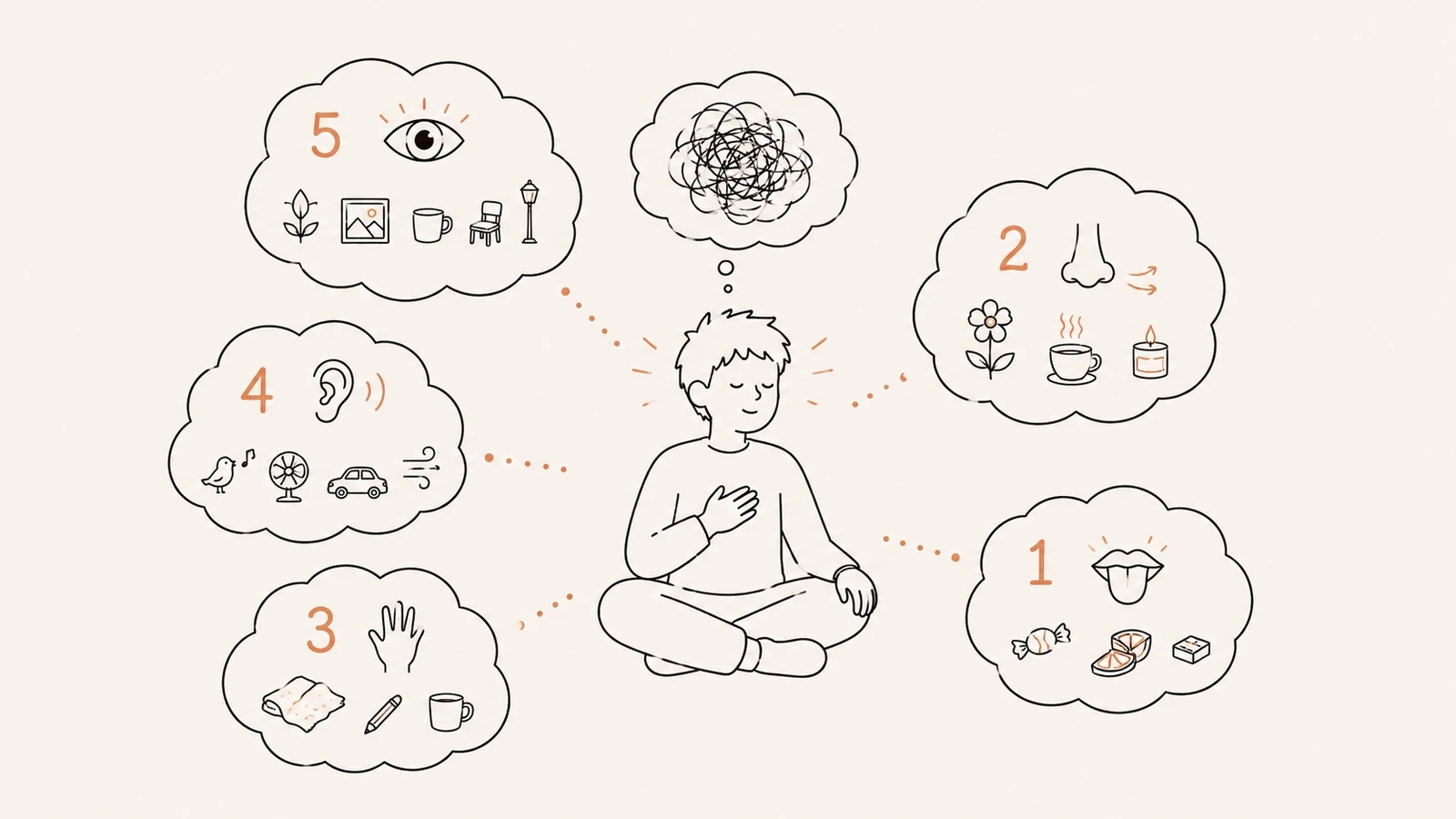
The 5-4-3-2-1 grounding technique gives your attention a simple job when anxiety, stress, or a thought spiral feels overwhelming. You slowly notice five things you can see, four you can feel, three you can hear, two you can smell, and one you can taste. It may help you reconnect with the present. It is not a test, and it does not have to make the feeling disappear to be useful.
How to do the 5-4-3-2-1 technique
Start where you are. Sit, stand, or keep walking if that is what feels comfortable and safe. Take the sequence slowly; finishing fast is not the point.
- 5 things you can see. Look for details: a shadow, a corner of the room, a color in your clothing, a reflection, your hands.
- 4 things you can feel. Notice contact and temperature: your feet on the floor, fabric on your skin, the chair beneath you, air on your face.
- 3 things you can hear. Listen for sounds nearby and farther away without deciding whether they are pleasant.
- 2 things you can smell. If nothing is obvious, move toward a familiar scent if it is safe, or name two scents you remember.
- 1 thing you can taste. Notice the taste already in your mouth, take a sip of water, or name a familiar taste.
Name each item silently or out loud. If you lose count, begin from the sense you remember. There is no need to restart.
Why it works
“Works” needs an honest definition here. Grounding does not diagnose the cause of distress, guarantee calm, or treat an anxiety disorder. It gives attention a concrete present-moment task instead of leaving all of it inside a prediction, memory, or body scan.
NHS inform describes grounding as a technique that can help reduce overwhelming anxiety and stress by taking attention away from uncomfortable symptoms or thoughts. Its grounding exercise guide uses this same five-senses sequence.
A useful result can be small: noticing one sound outside the spiral, feeling your feet again, or creating enough space to choose what to do next.
If one of the five senses is difficult to use
The numbers are a structure, not a rule. If smell or taste is difficult, use more things you can see, feel, or hear. If closing your eyes or focusing on your body makes distress worse, keep your eyes open and name objects in the room. A shorter 3-2-1 version is still grounding.
You can also stop. Grounding is optional. Some people find sensory focus helpful; others prefer movement, talking to someone they trust, or a different coping skill.
When to practice it
Try the sequence once on an ordinary day. Familiarity can make it easier to remember when your attention is crowded. You might save the five numbers in a note, choose one textured object to keep nearby, or begin with only the senses that feel natural.
Grounding can be one tool during a familiar anxiety spike, a panic attack, a replayed conversation at night, or a moment of feeling disconnected. It should not be used to explain away new or severe physical symptoms. If you think you may be facing a medical emergency, seek urgent medical help.
What if it does not help?
That does not mean you performed it incorrectly. Try a simpler version, switch to another skill, or ask someone you trust to stay with you. If anxiety is recurring, disrupting daily life, or leading you to avoid places and activities, taking a free 2-minute GAD-7 anxiety check can help you quantify the pattern, and a licensed professional can recommend appropriate care.
Once you can notice the room, notice the thought.
sokoon offers one full text session every day on Free. Use it to put what happened into words and consider one next step. It is not therapy or crisis care.