Feeling Disconnected From Everything: How to Reconnect
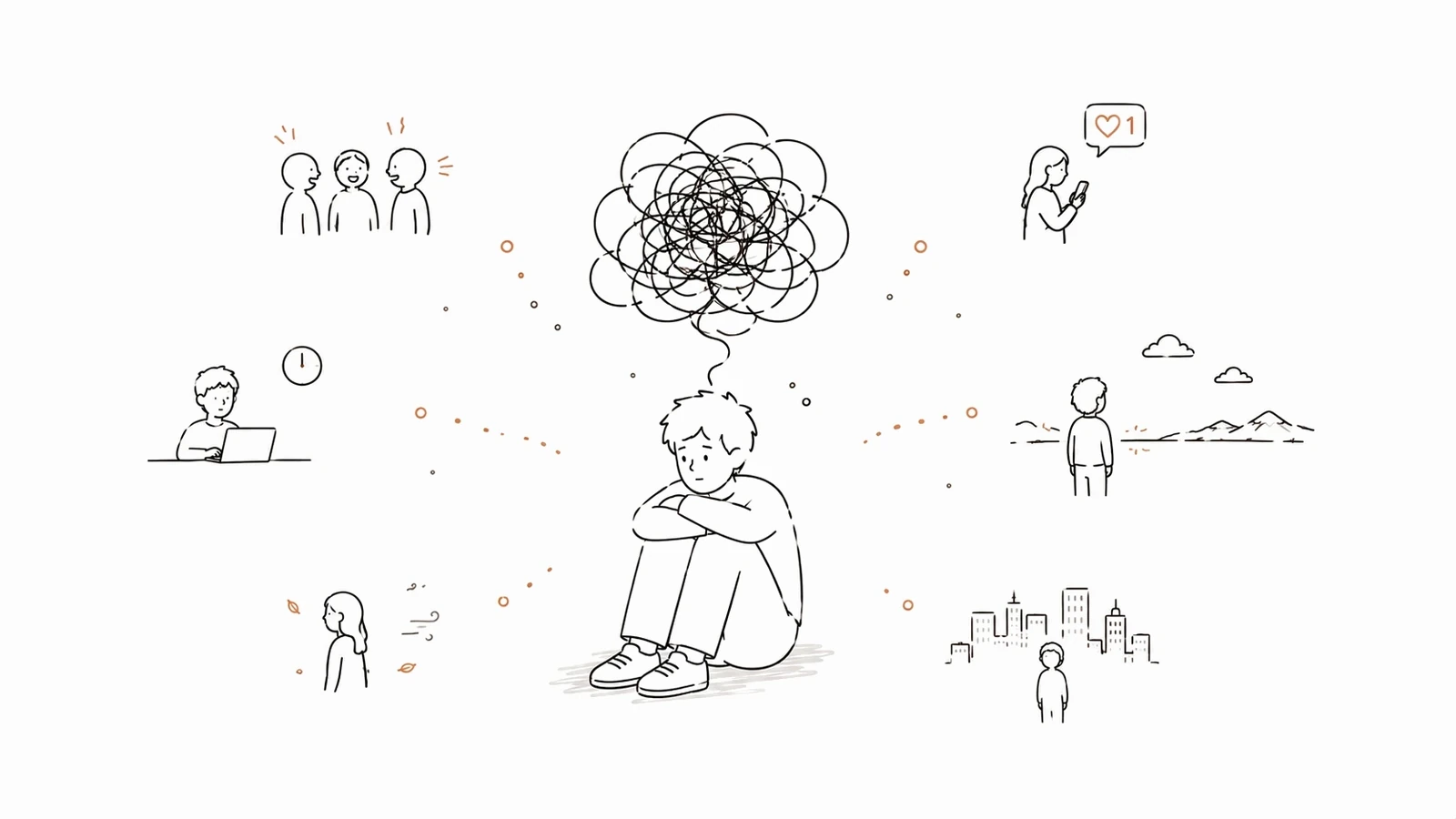
“Disconnected” can describe several different experiences: feeling emotionally distant from people, moving through the day on autopilot, feeling detached from yourself, or sensing that the world is foggy or unreal. Those experiences can happen with stress, exhaustion, anxiety, depression, trauma, dissociation, substances, medication, or physical health. The feeling alone cannot tell you which explanation fits.
Which kind of disconnection do you mean?
Emotional disconnection can feel like being distant from people or unable to access your usual feelings. Autopilot may mean completing tasks with little attention or memory of the details. Depersonalization describes feeling detached from yourself, while derealization describes surroundings feeling unreal, lifeless, or foggy.
The NHS guide to dissociative disorders explains those terms, but reading a definition is not the same as being diagnosed. Brief episodes and persistent, disruptive symptoms are not the same clinical picture.
What can contribute to feeling disconnected
Stress and overwhelming experiences can contribute to dissociation, and anxiety and catastrophic thoughts can make an unfamiliar sensation feel more alarming. Exhaustion, grief, depression, trauma-related symptoms, migraine, medication, alcohol or drugs, and some physical or neurological conditions can also be relevant. It is safer to look at the whole context than to assume the feeling is simply stress.
Fear can add a second loop: you notice the distance, monitor it closely, search for certainty, and become more absorbed in whether everything feels normal yet. Recognizing that loop can reduce extra alarm, but it should not be used to dismiss new, severe, or persistent symptoms.
“Disconnected” is a description, not a verdict. Notice what kind of distance you mean, when it began, and what else changed around the same time.
What you can do in the moment
If you are physically safe and this is a familiar experience, try giving attention to concrete details around you. Name the date and where you are. Feel both feet on the floor. Describe one object carefully. The 5-4-3-2-1 grounding technique offers a longer sensory sequence. Stop if focusing inward or on your senses makes distress worse.
Reduce immediate demands where possible and orient toward ordinary information rather than testing whether the world feels real yet. Eating, sleep, movement, daylight, and contact with someone you trust may support you, but they are not substitutes for assessment when the experience is persistent or severe.
How to reconnect, starting smaller than you think
The instinct is to try to feel more. That is usually the thing that keeps it going, because trying to force a feeling turns into checking whether it worked, and checking is the same monitoring loop described above wearing a different coat.
What tends to help is the reverse order. Act first and let the feeling catch up later, instead of waiting until you feel ready. Therapists call this behavioural activation, and it is one of the better studied parts of CBT. The point is not that doing the dishes will move you. It is that waiting to feel motivated before doing anything keeps you waiting.
Lower the bar until it is almost embarrassing. If a walk feels like too much, stand outside the door for two minutes. If cooking is too much, eat something you did not have to make. A small thing you actually did beats a reasonable thing you did not.
Choose contact over conversation. Waiting until you feel like talking can mean waiting a long time. Sending someone a photo, a question about their day, or a plain “thinking of you” takes almost nothing and keeps the thread alive. Sitting in the same room as someone counts too.
Give the day two fixed points. When the days blur, the autopilot version of disconnection gets worse. A consistent waking time and one meal at roughly the same hour give the day edges again, which is a modest thing that does more than it sounds like it should.
Look honestly at what is flattening you. Short sleep, alcohol, and very long stretches of scrolling all dull emotional response, and all three get more appealing when you already feel far away. You do not have to fix them. Just notice whether the numbness tracks them.
Set a marker rather than a verdict. Pick a date two or three weeks out and decide in advance that if nothing has shifted by then, you will talk to someone rather than keep waiting it out alone. That way you are not assessing yourself daily, which is exhausting and rarely accurate.
If the distance shows up mostly as replaying things or as a mind that will not settle at night, those have their own approaches: how to stop ruminating and how to stop overthinking at night. If it shows up as flatness more than distance, emotional numbness is the closer description.
When it is your partner you feel far from
This is a different problem that often gets filed under the same word. Emotional distance shows up in most long relationships at some point, usually after a stretch of stress rather than because something specific went wrong.
Check the general version first. If you feel equally flat toward friends, work, food, and things you used to like, the relationship is probably not the cause, and treating it as the cause can do real damage. If the distance is specific to one person, that is worth its own conversation.
When you do raise it, describe the change rather than delivering a verdict. “I have felt far away for about a month and I do not think it is about you” lands very differently from “I do not feel anything anymore.” The first invites help. The second usually starts a fight neither of you wanted. There is more on opening that kind of conversation in how to talk to the people in your life about your mental health.
When to seek professional or medical help
Arrange a professional assessment if the feeling keeps returning, lasts for a long time, causes significant distress, creates memory gaps, or interferes with work, relationships, driving, or caring for yourself. Mention medication changes, substance use, headaches, fainting, sleep loss, and any other physical symptoms.
Sudden confusion, loss of consciousness, new neurological symptoms, a head injury, or symptoms that make you think you may be facing a medical emergency need urgent medical care. If you may harm yourself or someone else or cannot stay safe, contact local emergency services now.
Common questions
What does it mean if you feel disconnected?
It usually means one of four things, and they are not the same. You may feel emotionally distant from people, you may be running on autopilot with little memory of the day, you may feel detached from yourself, or your surroundings may seem unreal or foggy. The word covers all four, which is why naming the specific one you mean is the most useful first step.
How do you fix feeling emotionally disconnected?
Not by trying to feel more, which tends to backfire. What helps most people is doing ordinary things at a lower bar than usual and letting the feeling catch up afterward, rather than waiting to feel ready before acting. Keep contact with people simple and low effort, protect sleep, and watch for the monitoring habit where you keep checking whether you feel normal yet. If it lasts weeks or interferes with daily life, that is the point to involve a professional.
What causes a feeling of being disconnected?
Stress, exhaustion, grief, depression, anxiety, trauma-related symptoms, and dissociation are common contributors. So are alcohol, drugs, some medications, migraine, and certain physical or neurological conditions. The feeling on its own cannot tell you which one applies, which is why timing matters: what else changed around when it started?
What is emotional blunting?
Emotional blunting describes a flattening of your emotional range, where both good and bad feelings register more faintly than usual. People report it with depression, with dissociation, and as a side effect of some antidepressants. If it started after a medication change, raise it with the clinician who prescribed it rather than stopping on your own.
Start by describing what “disconnected” means for you.
sokoon offers a free daily text session with no credit card required. Use it to organize the pattern and prepare what you may want to tell someone you trust or a licensed professional.