Can't Afford Online Counseling? Your Real Options, Cheapest First
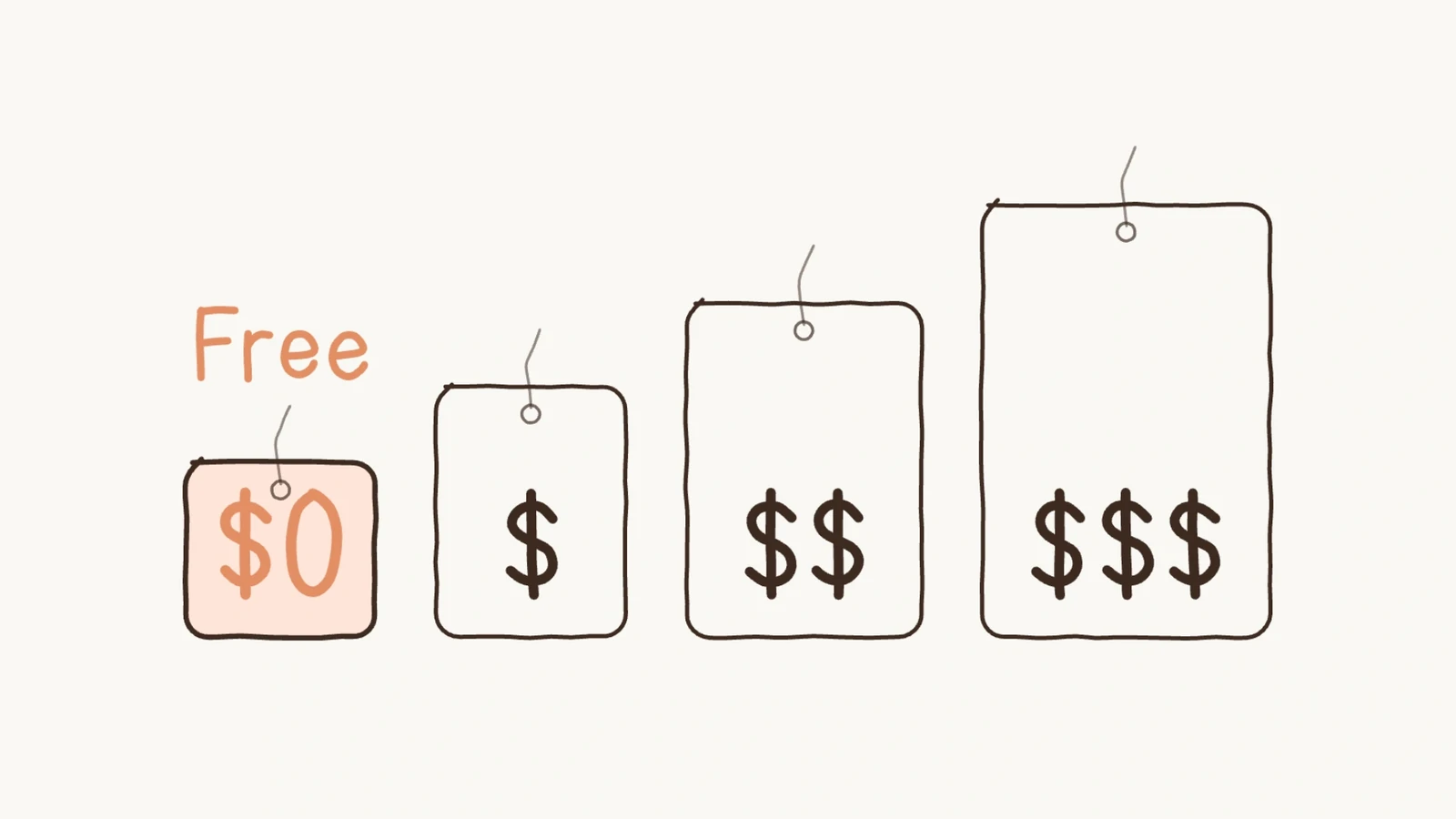
You looked up online counseling, saw the price, and closed the tab. BetterHelp runs roughly $240 to $400 a month. Talkspace sits in the same range. If that number ended the conversation for you, this page is the rest of the conversation: every real option we know of, ordered from free to cheapest, with honest notes on what each one is good for. One disclosure before we start: we make an AI mental health app. It appears once on this list, in its place, and the rest of the list does not care whether you ever use it.
Why it costs that much in the first place
The price is not a scam. You are paying for the time of a licensed professional who spent six or more years training, carries malpractice insurance, and can only see so many people in a week. That cost is legitimate. It is also simply out of reach for a lot of people, and the mental health field's quiet secret is that most of the people who need support never get past the pricing page. So here is what exists on the other side of that wall.
Free: peer support and crisis lines
First, the line that matters most. If you are in danger or thinking about harming yourself, skip everything below and contact a crisis line now. In the US that is 988, by call or text, free and staffed around the clock. Most countries have an equivalent, and a search for "crisis line" plus your country will find it.
For everything short of crisis, 7 Cups offers free chats with trained volunteer listeners, anonymously. A volunteer listener is not a counselor and will not pretend to be one, but being genuinely heard by a person who chose to be there costs nothing and helps more than it sounds like it should. Peer support groups, in person or online, sit in the same category: free, human, and underrated.
Cheap human counseling: the options nobody tells you about
This is the section we wish someone had shown us earlier. Licensed human care for a fraction of the listed price exists, and it is not a loophole. It is how the field trains its next generation and serves people the market misses.
- Open Path Collective. Open Path is a nonprofit network of therapists who reserve slots at $30 to $70 per session, with student intern sessions from $30. You pay a one-time membership fee of $65, once, for life. For many people this single link is the answer to the entire affordability problem.
- University training clinics. Graduate psychology programs run clinics where advanced students see clients under close supervision by licensed clinicians, at steep discounts and sometimes free. The care is often excellent precisely because every session gets reviewed.
- Sliding scale, which you get by asking. Many private therapists keep a few reduced-fee slots and do not advertise them. The script is one sentence: "Do you offer a sliding scale, or could you refer me to someone who does?" The worst outcome is a referral.
- Community mental health centers. Publicly funded clinics charge based on income. Waitlists can be real, but the price can go as low as nothing.
Money you might already have
If you are employed, check whether your company has an employee assistance program. EAPs typically include a handful of free counseling sessions per year, and almost nobody uses them because almost nobody knows they exist. They are confidential, and your employer does not learn who used them. If you have health insurance, it may cover teletherapy visits with a copay far below the subscription apps. Ten minutes reading your benefits page can be worth hundreds of dollars.
AI support: what it is and is not
Here is our one entry, with the same honesty as the rest of the list. sokoon is an AI built for mental health conversations, informed by CBT and DBT, with memory across sessions, mood tracking, and encryption. The free plan includes a real session every day. It is available anytime, there is no waitlist, and you never have to say the hard thing to a human face before you are ready.
It is not counseling. No AI is, whatever the ads say, and we have written at length in our complete AI therapy guide and about how to judge any app calling itself an AI therapist. The honest role of AI support on this page is the gap-filler: the months on a waitlist, the weeks between cheap sessions, the years where even $30 a session is not happening, and the ordinary days that never needed a professional in the first place. Used that way, it is a genuinely good tool. Used as a replacement for the human care options above when you need them, it is the wrong tool, and an honest app will tell you so.
How to pick, based on where you are
If money is the only blocker and you want human counseling, start with Open Path and your EAP, in that order. If waitlists are the blocker, pair a free option with a spot in line: 7 Cups or an AI app now, the clinic when your name comes up. If what you mostly need is a private place to think out loud and build skills, AI support or peer support may be the whole answer for now. If you're unsure which path fits your circumstances, taking our free 2-minute support fit quiz can help you decide honestly. And if you are in crisis, none of this list applies: crisis line, now, every time.
The free option you can try in the next two minutes.
sokoon's free plan includes a full session every day, no card required. Use it while you wait, between sessions, or just tonight.